
Tap Water vs Filtered Water: Discover What’s Really in Your Glass (2026)
Tap Water vs. Filtered Water
What’s Actually in Your Glass?

That glass of water looks clean — but recent research suggests what’s in it may surprise you.
A landmark survey of nearly 50,000 U.S. water systems recently identified 324 distinct contaminants in American tap water — many at concentrations that exceed what independent health experts consider safe, even when they fall within legal EPA limits. This is not a reason to panic. But it is a reason to understand exactly what is in your water, and what a quality filter actually does about it.
- The state of U.S. tap water in 2026
- The 5 most common contaminants — and what they do
- What “legal” actually means (it’s not the same as safe)
- What different filter types actually remove
- Tap vs. filtered vs. bottled — side by side
- How to choose the right filter for your home
The state of U.S. tap water in 2026
The U.S. has one of the most extensive public water systems in the world. The EPA sets legal limits on over 90 contaminants under the Safe Drinking Water Act. By those standards, the vast majority of tap water in the United States is technically safe to drink. But “technically safe” and “completely clean” are not the same thing.
⚠️ “Legal does not equal safe.” Many federal limits for tap water contaminants have not been updated in nearly two decades. Independent health organizations like the Environmental Working Group (EWG) set their own health guidelines that are significantly stricter than EPA legal limits — and by those standards, millions of Americans are regularly exposed to water that exceeds safe levels.
The bigger picture concern is not any single contaminant at a detectable level. It is the combination of multiple low-level contaminants consumed daily over years or decades — an area where long-term research is still catching up to real-world exposure.
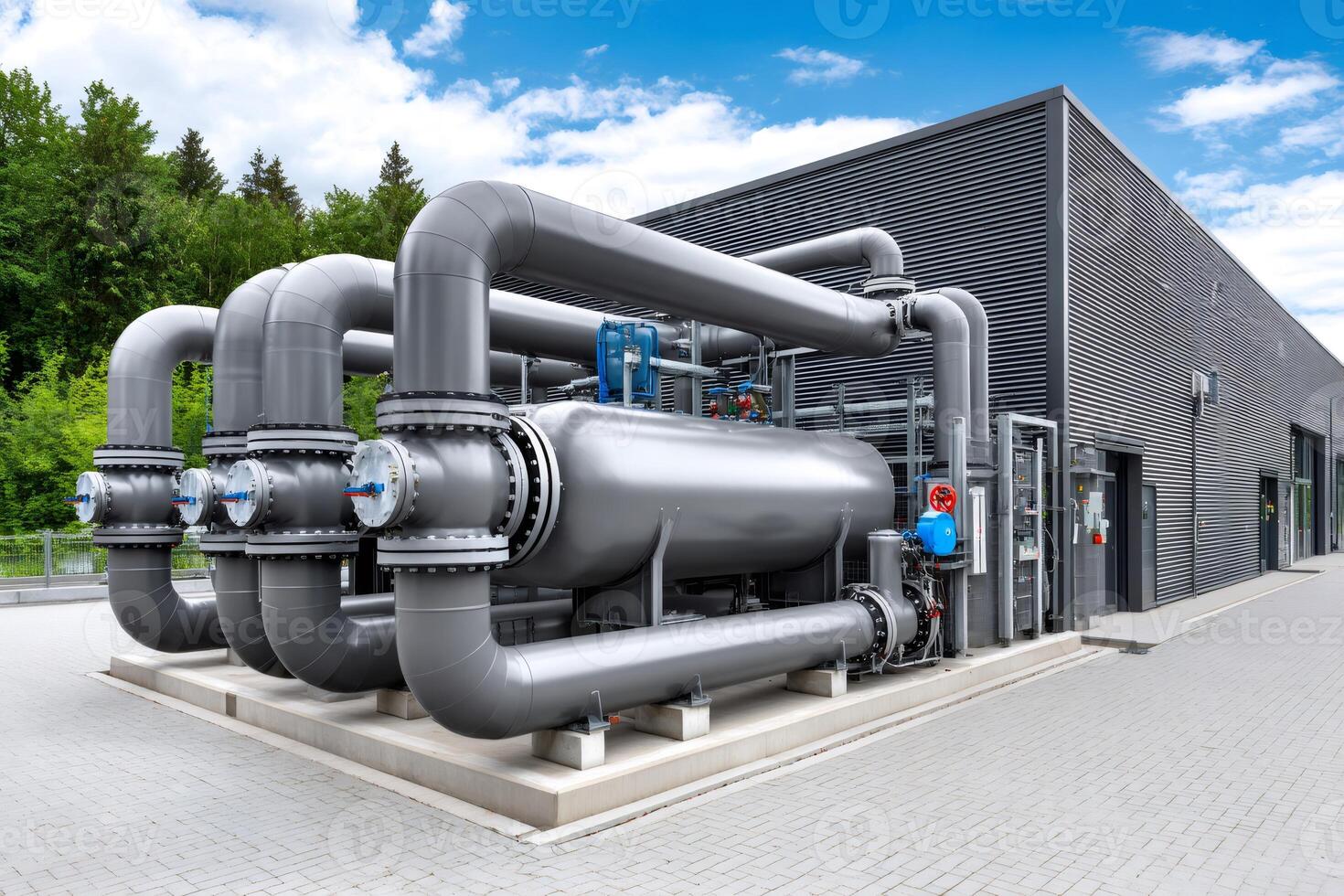
Municipal water treatment removes many contaminants — but aging infrastructure, agricultural runoff, and industrial pollution add others back in before the water reaches your tap.
The 5 most common contaminants and what they do
⚠️ Lead
Leaches from aging pipes and plumbing fixtures, particularly in homes built before 1986. There is no safe level of lead exposure. Even trace amounts are linked to developmental delays in children and kidney damage in adults. Lead is not removed by boiling.
Risk: High in older homes and urban infrastructure
🌞 PFAS (Forever Chemicals)
Per- and polyfluoroalkyl substances are synthetic chemicals used in everything from non-stick cookware to firefighting foam. They do not break down in the body or environment. Linked to cancer, hormonal disruption, and immune suppression. Present in water supplies serving over 143 million Americans.
Risk: Widespread, especially near industrial sites and military bases
💧 Chlorine & Chloramines
Added intentionally to kill bacteria during water treatment. At low levels, chlorine is considered safe — but it affects taste and smell significantly, and disinfection byproducts (THMs, HAAs) formed when chlorine reacts with organic matter are linked to increased cancer risk with long-term exposure.
Risk: Nearly universal in municipally treated water
🔫 Nitrates & Arsenic
Nitrates enter water through agricultural fertilizer runoff and septic systems. High levels are dangerous for infants (blue baby syndrome). Arsenic occurs naturally in rock formations and from industrial pollution; it is a known carcinogen with no safe level for long-term consumption. Found in supplies for over 134 million Americans.
Risk: Higher in agricultural regions and areas with older bedrock
🔍 Check your zip code: The Environmental Working Group’s Tap Water Database (ewg.org/tapwater) lets you enter your zip code to see exactly which contaminants have been detected in your local water supply and at what levels. It is free and updated regularly.
What “legal” actually means
The EPA’s maximum contaminant levels (MCLs) are legal limits, not health limits. They are set based on a balance of what is technically achievable and economically feasible for water utilities to meet — not solely on what independent scientists consider safe. Many of these standards have not been revised in nearly 20 years, despite significant advances in toxicology research.
The result: water can be fully compliant with all EPA standards and still contain contaminants at levels that independent health researchers consider problematic for long-term daily consumption. This gap is exactly what a quality home water filter is designed to address.
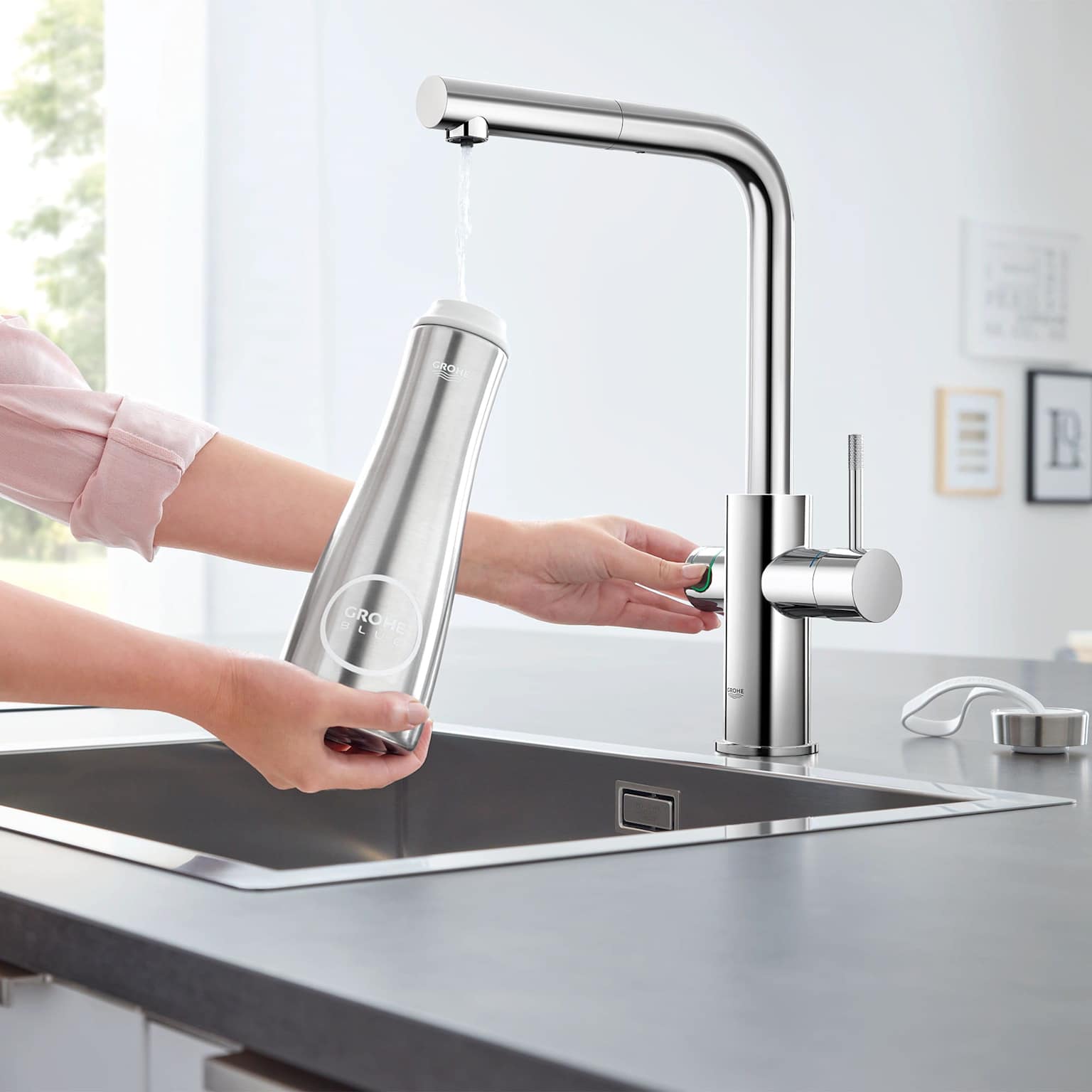

A quality faucet or under-sink filter provides an additional layer of protection beyond municipal treatment.
Filtered water is not just about what is removed — cleaner water improves taste, encourages better hydration, and builds long-term health habits.
What different filter types actually remove
Not all filters are equal. Different technologies remove different contaminants. Understanding what each type does (and does not do) is essential to choosing the right system for your specific water supply.
The most common filter type. Carbon is highly porous and absorbs chlorine, volatile organic compounds (VOCs), and many pesticides. Significantly improves taste and odor. Does not remove heavy metals, nitrates, fluoride, or PFAS effectively.
Common in: Pitcher filters, faucet filters, refrigerator filters
Forces water through a semi-permeable membrane that blocks nearly all contaminants, including lead, PFAS, nitrates, arsenic, fluoride, and dissolved solids. The most thorough residential filtration available. Produces some wastewater in the process.
Common in: Under-sink systems, countertop RO units
Exchanges unwanted ions (like lead, barium, or radium) for harmless ones. Highly effective for hard water and specific heavy metals. Often combined with carbon filters for broader protection. Used in whole-house water softeners and some pitcher filters.
Common in: Water softeners, combination pitcher filters
Installed at the point where water enters the home, treating every tap, shower, and appliance. Typically use a combination of sediment filters, activated carbon, and sometimes UV treatment. The most comprehensive household solution, especially for areas with heavy sediment or chloramine treatment.
Common in: Whole-house point-of-entry installations
Tap vs. filtered vs. bottled — side by side
| Factor | Tap Water | Filtered Water | Bottled Water |
|---|---|---|---|
| Contaminant removal | Partial (EPA standard) | High (filter-dependent) | Varies widely by brand |
| Taste & odor | Varies by region | Significantly improved | Generally clean |
| PFAS removal | No | Yes (RO / 2-stage) | Not guaranteed |
| Lead removal | No (depends on pipes) | Yes (RO / carbon block) | Not present |
| Cost per gallon | ~$0.002 | ~$0.01–$0.05 | ~$1.00–$3.00 |
| Environmental impact | Very low | Very low | High (plastic waste) |
| Microplastics | Some detected | Removed (RO) | Significantly more |
| Long-term cost | Lowest | Low | Very high |
🌿 The bottled water truth: Studies have consistently found that bottled water contains significantly more microplastics than tap water — largely from the plastic bottle itself. The FDA does not require bottled water companies to disclose their contaminant test results publicly, while municipal water utilities must publish annual water quality reports. Filtered tap water is the cleanest and most cost-effective option available.
How to choose the right filter for your home
The right filter depends on what is actually in your local water. Here is the fastest way to match your situation to the right solution.
| Your situation | What to look for | Best filter type |
|---|---|---|
| Want better taste and odor, basic protection | NSF/ANSI 42 certified | Pitcher or faucet carbon filter |
| Older home with lead pipe risk | NSF/ANSI 53 certified for lead | Under-sink carbon block or RO |
| PFAS concern (near industrial or military sites) | NSF/ANSI 58 certified RO or PFAS-rated | Reverse osmosis system |
| High nitrates (agricultural area or rural well) | NSF/ANSI 58 certified | Reverse osmosis |
| Want whole-home protection (every tap and shower) | Multi-stage whole-house unit | Whole-house filtration system |
| Hard water causing scale on appliances | Softening + filtration combo | Ion exchange + carbon |
📋 NSF certification matters: When choosing a filter, look for NSF/ANSI certification numbers on the label. NSF 42 = taste & odor. NSF 53 = health contaminants including lead. NSF 58 = reverse osmosis including PFAS. These certifications are independently verified and are the most reliable indicator of what a filter actually removes.
✨ Top-Rated Reverse Osmosis Systems in Our Store
The bottom line
Tap water in the U.S. meets EPA legal standards in the vast majority of systems. But legal compliance does not mean the absence of contaminants — it means contaminants are within limits set decades ago by regulations that balance public health with what utilities can realistically achieve at scale.
Filtered water is not a luxury. It is a cost-effective layer of protection that removes what municipal treatment cannot, at a fraction of the cost of bottled water and with a fraction of the plastic waste. A quality NSF-certified filter — matched to your specific water supply — is one of the simplest and highest-impact investments you can make for your household’s daily health.
Frequently Asked Questions
SEO title: Tap Water vs. Filtered Water: What’s Actually in Your Glass? (2026)
Meta description: A recent study found 324 contaminants in U.S. tap water. Find out what’s actually in your glass, what filtered water removes, and which filter type is right for your home.
URL handle: tap-water-vs-filtered-water-whats-in-your-glass